


September 9, 2026
Table of contents
- Málaga vs. Marbella at a Glance
- Choose Málaga If You Want to Explore
- Choose Marbella If You Want to Slow Down
- What About the Beaches?
- Which Has Better Hotels: Málaga or Marbella?
- Is Málaga or Marbella Better for Couples?
- Is Málaga or Marbella Better for a Short Stay?
- Can You Visit Marbella From Málaga?
- Málaga or Marbella Before Continuing to Madrid?
- So, Is Málaga or Marbella Better?

If you’re planning a trip to southern Spain, there’s a good chance you’ll find yourself comparing Málaga vs. Marbella.
They’re only about an hour apart on Spain’s Costa del Sol, they both offer sunshine and easy access to the coast, and either can work beautifully as part of a larger Spain itinerary.
I wouldn’t choose between Málaga and Marbella based on which one has the prettier hotel or better beach photos. Choose based on how you want to spend your days.
The simplest way I explain the difference?
Choose Málaga if you want to explore.
Choose Marbella if you want to exhale.
Málaga vs. Marbella at a Glance
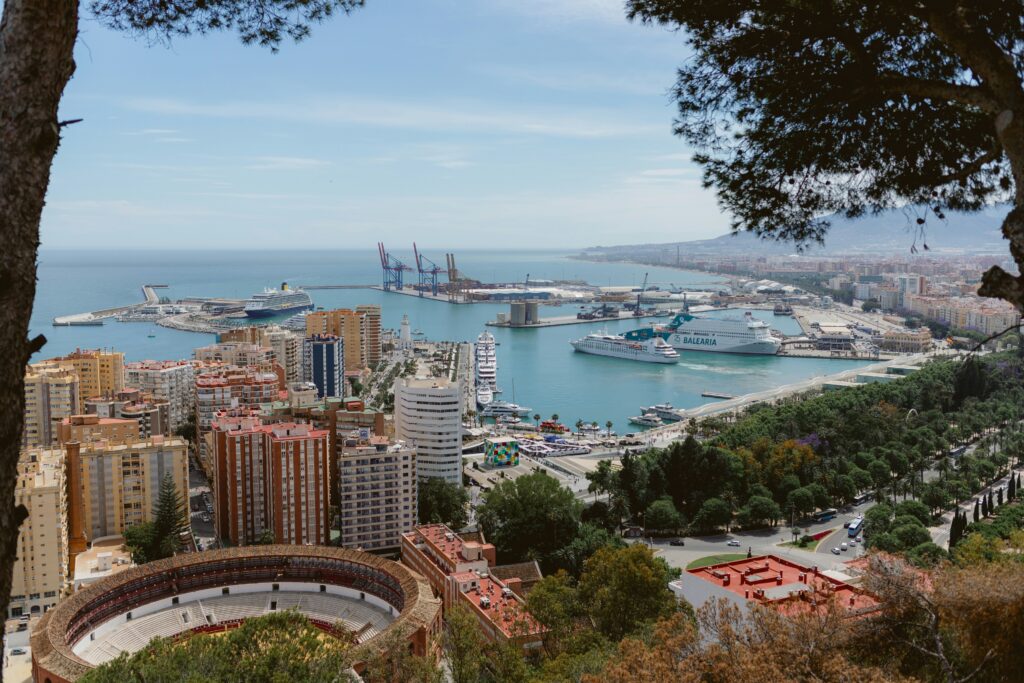
Málaga is a real Spanish city that happens to sit on the Mediterranean. You’ll find museums, historic sites, restaurants, shopping, rooftop bars and neighborhoods worth wandering, with the beach there when you want it.
Marbella is much more about the coastal vacation experience. Think resort hotels, beach clubs, long lunches, pool time and a slower rhythm.
That doesn’t mean there’s nothing to do in Marbella, or that Málaga can’t be relaxing. But when I’m deciding which one makes more sense for a client, I’m looking at what they want the destination to add to the overall trip.
Choose Málaga If You Want to Explore
Málaga works particularly well for travelers who don’t want their time on the Costa del Sol to be solely about the beach.
The historic center is compact and walkable, so you can spend the morning exploring and stop for tapas, shopping or drinks without needing to plan your entire day around transportation.
There’s also considerably more to see. You can visit the Alcazaba, walk around the Roman Theatre, explore the Picasso Museum, wander through the old town and head up to a rooftop for drinks overlooking the city.
And because Málaga is a city rather than primarily a resort destination, there’s more happening beyond the tourist experience.
Málaga is a good fit if you:
- Like walking out of your hotel and having plenty to do
- Prioritize restaurants, culture and sightseeing
- Want some beach time but don’t need the beach to be the entire trip
- Prefer a city atmosphere over a resort atmosphere
- Are combining the Costa del Sol with other parts of Spain
For a couple spending only two or three nights in the area as part of a longer Spain itinerary, Málaga can be especially easy. You arrive, check in and you’re already in the middle of things.
Choose Marbella If You Want to Slow Down
Marbella makes more sense when those few days in southern Spain are supposed to feel like a break from the rest of the itinerary.
Maybe you’ve already spent several days sightseeing in Madrid or Seville. Maybe you’re heading to Barcelona next. Or maybe you simply want part of the trip to involve fewer plans. This is where Marbella shines.
Your hotel matters more here because it can become a bigger part of the experience. A beautiful pool, beach access, a great spa or somewhere you genuinely want to spend the afternoon isn’t just a bonus.
It’s part of the reason you’re staying in Marbella. You can still explore Marbella’s Old Town, go out for dinner and spend time away from the resort. But you don’t necessarily need a sightseeing agenda every day.
Marbella is a good fit if you:
- Want a resort-style stay
- Prioritize pool and beach time
- Like beach clubs and long lunches
- Want your hotel to be part of the vacation experience
- Need a few slower days in the middle of a busier Spain itinerary
If your vision is waking up, having a leisurely breakfast and deciding between the pool and beach rather than deciding which attraction to visit first, I’d lean toward Marbella.
What About the Beaches?
This is where expectations matter. If you’re imagining the Costa del Sol as miles of powdery Caribbean-style sand and turquoise water, neither destination is going to deliver that exact experience.
But if being on the coast is important, Marbella generally gives you more of the traditional beach-vacation atmosphere.
Málaga has beaches, including La Malagueta close to the city center, but I usually think of the beach as one component of a Málaga stay rather than the primary reason to choose it. In Marbella, the coastal lifestyle is much more central to the experience.
Which Has Better Hotels: Málaga or Marbella?
Both have excellent hotels, but they tend to serve different purposes. In Málaga, I generally prioritize location. Being able to walk out the door and easily reach restaurants, shops and sights adds a lot to a short stay.
Hotels such as Palacio Solecio are a great example of why Málaga can work so well for higher-end travelers who still want to feel connected to the destination.
In Marbella, I’m more likely to prioritize the property itself. If you’re choosing Marbella because you want downtime, it’s worth staying somewhere you’ll actually enjoy spending that downtime.
That can mean paying more attention to the pool, beach access, restaurants, room category and overall resort atmosphere.
Is Málaga or Marbella Better for Couples?
Either can be. For couples who love food, wandering through neighborhoods, stopping for drinks and having different options every day, I’d lean Málaga.
For couples who want the trip to feel more like an escape—with mornings by the pool, afternoons at a beach club and fewer scheduled activities—I’d lean Marbella.
For a honeymoon, anniversary or adults-only getaway, I wouldn’t automatically assume Marbella is the better choice just because it feels more traditionally “vacation-like.”
A couple who gets bored after two hours at a pool is probably going to enjoy Málaga more.
Is Málaga or Marbella Better for a Short Stay?
This is where Málaga often has an advantage. Málaga has its own major airport, and the historic center is relatively close to it. If you’re only staying two nights before continuing elsewhere in Spain, that convenience matters.
Marbella doesn’t have its own airport. Most international travelers arrive through Málaga Airport and transfer to Marbella. That doesn’t make Marbella difficult to reach, but I factor the additional transfer into the decision when clients have limited time.
If you only have two nights and want to see and do things, I’d usually choose Málaga. If those two nights are intentionally your “do very little” portion of the trip, Marbella can still be worth the transfer.
Can You Visit Marbella From Málaga?
Yes, and this can be a good solution if you don’t want to choose entirely. Málaga and Marbella are close enough that you can visit one while staying in the other. Just keep in mind that there isn’t a direct train connecting central Málaga and Marbella, so you’ll need to use a car, transfer or bus.
For most of my clients, though, I don’t choose a home base based on whether they can visit the other city. I choose the place that best matches how they want most of those days to feel.
Málaga or Marbella Before Continuing to Madrid?
If you’re continuing your trip by train, Málaga has a significant logistical advantage. Málaga is connected to Madrid by high-speed rail, making it easy to go directly from the Costa del Sol into the city without returning to the airport. From Marbella, you’ll first need to transfer to a train station before continuing north.
For travelers who want to maximize sightseeing and minimize transportation logistics, that can tip the decision toward Málaga. But I wouldn’t let logistics make the entire decision.
If Marbella gives you exactly the kind of two or three days your itinerary is missing, an extra transfer may be completely worth it.
So, Is Málaga or Marbella Better?
Neither. And that’s exactly why I wouldn’t choose based on a generic list of “best places to stay on the Costa del Sol.”
Choose Málaga when you want your days filled with places to explore, restaurants to try and things to see.
Choose Marbella when you want the hotel, coast and slower pace to be the experience.
The better question isn’t Which destination is better? It’s what do you want this part of your trip to feel like?
Because the destination isn’t the decision. The experience is.
For travelers who want sightseeing, history, restaurants and a more urban Spanish experience, Málaga will usually offer more variety. Marbella is a stronger choice when relaxation and the resort experience are the priority.
Marbella can be more expensive, particularly at higher-end beachfront resorts, beach clubs and restaurants. Málaga offers a broader range of accommodations and dining options, although luxury stays are available in both destinations.
Marbella generally offers more of a beach-vacation atmosphere, especially if you choose a beachfront resort. Málaga has city beaches, but most travelers choose Málaga for the combination of culture, dining, sightseeing and coast rather than for the beach alone.
Marbella is roughly an hour from Málaga depending on traffic and your exact starting point. Málaga Airport is the primary airport for travelers staying in either destination.
No. There is currently no direct train to Marbella. Travelers typically reach Marbella by private transfer, rental car or bus.
For a larger Spain itinerary, two to three nights can work well in either destination. I’d favor Málaga for a short, active stay and Marbella for travelers deliberately building a few slower days into their itinerary.
Yes. Marbella can be visited from Málaga, although you’ll need to travel by road rather than direct train. If you’re mainly interested in seeing Marbella’s Old Town and getting a taste of the area, a day trip can work well.
It depends on the couple. Marbella is often a better fit for couples looking for a luxury resort and relaxation, while Málaga works well for honeymooners who prioritize dining, culture and exploring. For many honeymoons, the best choice depends on what else is included in the itinerary.